Home Solar Guide: Everything You Need to Know (2026)
📅 Updated February 2025 · 9 min read
Thinking about going solar? You're not alone. In 2025, solar panel costs have dropped to historic lows, and millions of American homeowners are making the switch. Here's your complete beginner's guide.
How Home Solar Works
Solar panels (also called photovoltaic or PV panels) convert sunlight into direct current (DC) electricity. An inverter then converts that DC electricity into AC power that your home uses. Any excess electricity is either sent back to the grid (earning you bill credits through net metering) or stored in a home battery like a Tesla Powerwall.

Is Your Home a Good Candidate for Solar?
Not every home is ideal for solar, but most are. Here's what installers look at:
Roof condition: Your roof should have at least 10–15 years of life remaining. South-facing roofs are ideal, but east/west-facing work well too.
Sun exposure: Minimal shading from trees or buildings is important. Even a few hours of shading can reduce output significantly.
Electricity usage: The more electricity you use, the faster solar pays back. Homeowners using 8,000+ kWh per year benefit most.
Ownership: You should own your home. Renters generally can't install solar
Types of Solar Panels
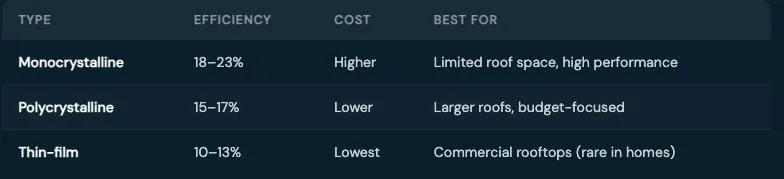
In 2025, monocrystalline panels dominate the residential market due to their superior efficiency and falling prices. Most quality home installations use panels rated 400–450W each.
The Solar Installation Process
1.Get 3+ quotes — Compare installers and pricing. Research shows homeowners who get multiple quotes save 10–20%.
2.Site assessment — A certified installer evaluates your roof, electrical system, and sun exposure.
3System design — The installer designs a custom system sized to your energy needs.
4Permits — Your installer handles all permits and utility interconnection paperwork.
5.Installation — Physical installation takes 1–3 days for most residential systems.
6.Inspection & activation — Local inspectors approve the system, then your utility turns on net metering...
How Much Can You Save?
Over 25 years, the average homeowner saves $37,000–$154,000 in electricity costs — depending on your state, usage, and rate increases. Solar also increases your home's value by approximately $15,000 on average.