How to Choose a Home EV Charger
📅 Updated February 2025 · 7 min read
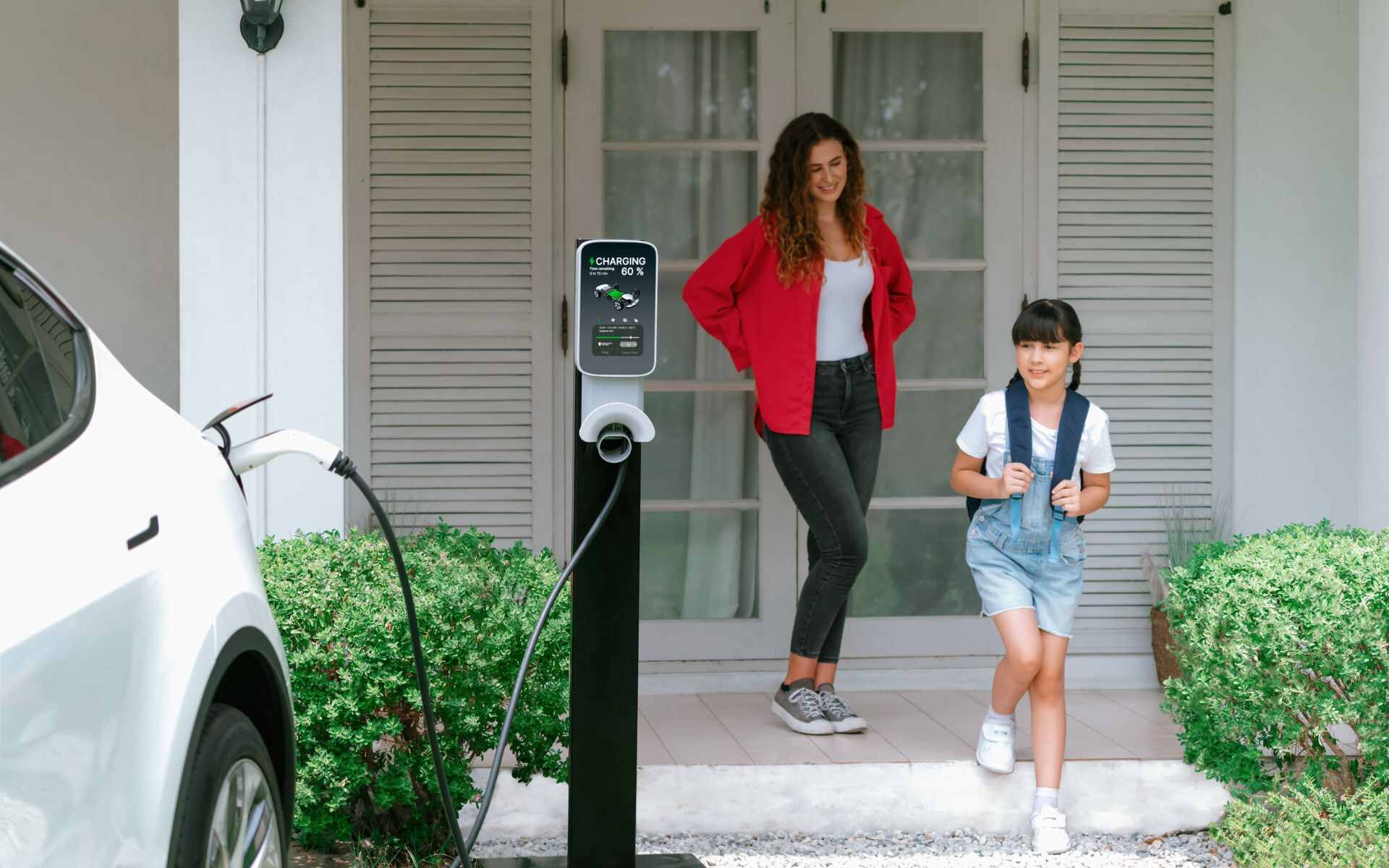
If you've just bought an electric vehicle — or you're about to — one of the first decisions you'll face is how to charge it at home. The good news: it's simpler than it sounds. Here's everything you need to know to make the right call.
Level 1 vs. Level 2: Which Do You Need?
There are two types of home EV chargers. Level 1 uses your standard 120V household outlet and adds roughly 3–5 miles of range per hour. No installation needed — you just plug in. It works fine if you drive under 30–40 miles a day and charge overnight.
Level 2 runs on a 240V circuit (like your dryer) and adds 25–40 miles of range per hour — charging most EVs fully in 6–8 hours. For the vast majority of American homeowners, a Level 2 charger is the right long-term investment.

NACS or J1772? Picking the Right Plug
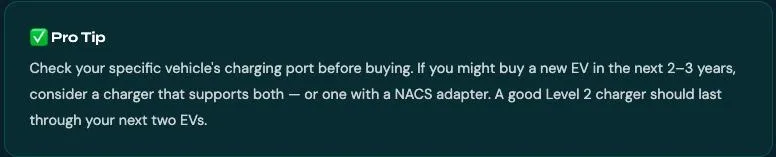
This is the trickiest part of buying in 2025. The auto industry is mid-transition between two connector standards:
J1772 — the round 5-pin plug used by most non-Tesla EVs made before 2025 (Chevy, Nissan, Hyundai, Kia, Audi, BMW, etc.)
NACS (North American Charging Standard) — Tesla's connector, now being adopted by Ford, GM, Rivian, and most major brands for their 2025–2026 models.
Key Features to Look for in 2025
Amperage (32–48A): Higher amps = faster charging. Go for at least 40A for future-proofing.
Smart features: Wi-Fi connectivity, app control, and off-peak scheduling can save you money on electricity.
Cable length: Choose 18–25 ft for flexibility. Measure the distance from your panel to your parking spot first.
Weather rating: If mounting outdoors, look for NEMA 4 or better.
Certifications: UL or ETL listed for safety compliance.
Hardwired vs. plug-in: Hardwiring is more reliable for permanent installs. Plug-in (NEMA 14-50) offers more flexibility if you rent or may move.
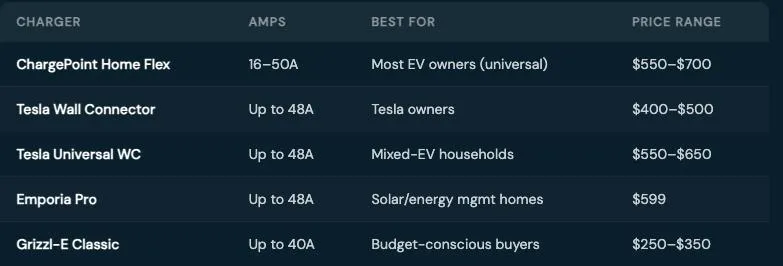
Top Home EV Chargers in 2025
Check Your Electrical Panel First
Before purchasing, have a licensed electrician verify your panel can handle the load. Most homes with a 200A panel can easily accommodate a Level 2 charger. Homes with older 100A panels may need an upgrade or an energy management system.
Installation typically takes 2–4 hours and costs $500–$1,500 in labor, depending on your setup. The total investment — charger + installation — usually runs $1,000–$2,500 before rebates.
